

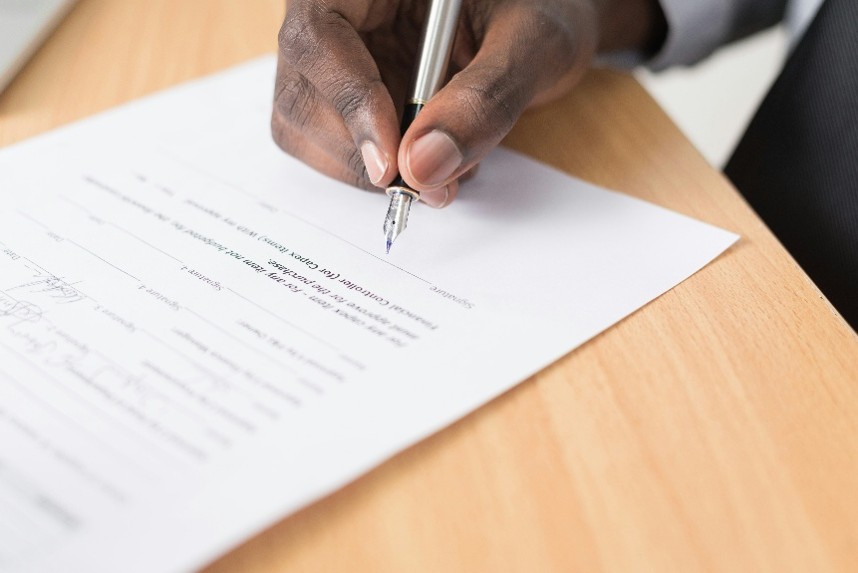
A piece produced to make amends can become the element that aggravates a situation. On October 22, 2026, the Athletics Integrity Unit released a decision that illustrates this: a medical order presented to justify a positive doping test turned out to be fabricated, including the signature. For a lawyer confronted with a contested document, this case shows what a methodical examination of the document and its signature can establish, and why it is better to conduct it before the document becomes a factor in the proceedings.
A document that does not withstand verification
According to the decision of the Athletics Integrity Unit (AIU), relayed by the Associated Press, an international marathon runner produced a medical order explaining the presence of an banned corticosteroid in a sample taken during competition. The body’s checks established two distinct elements:
- The clinic mentioned in the prescription did not exist
- The signature was that of a member of the athlete’s family, without medical qualifications.
The court imposed two years of suspension for the substance detected, and an additional four years for tampering with the anti-doping procedure. The production of the document therefore weighed twice as heavily as the initial fact. This pattern is found in civil and criminal cases: a document produced to defend oneself, whose authenticity cannot withstand close scrutiny.
What an examination of documents and signatures combines
In this case, investigative checks were sufficient: the existence of the clinic and the identity of the signatory. In a procedure, a contested document does not always come with such checks. The expert report then provides material findings obtained through non-destructive examinations:
- The outline of the signature pressure, speed of execution, repetitions and hesitations incompatible with a spontaneous gesture
- the coherence of the document : header, stamp or mention referring to a verifiable entity or not
- temporal consistency The announced date is confronted with what the paper and printing reveal
These levels of examination are reinforced: a documentary incoherence guides the examination of the signature, and vice versa. No single piece of evidence is sufficient to draw a conclusion; it is their convergence, recorded step by step, that forms the conclusion. This combination is followed. The laboratory’s expertise method : a documented protocol, from receipt of the document to the report.
The signals that a lawyer can detect before the expert report
Without replacing the expert, a first glance often reveals a piece that deserves an examination:
- an institution, clinic or company mentioned in the document, but not found
- a signature that differs from other known copies of the same person
- a date incompatible with the context of the case
- a piece produced late, without explanation about its origin
None of these signs alone is proof. They do, however, justify not deciding without examination whether the document serves your cause or was produced by the opposing party. The page dedicated to lawyers present the intervention frameworks: private expertise, counter-expertise and critical review of an adverse report.
Prepare the room before the exam
The quality of a signature expertise depends partly on the condition of the document and the available comparison elements. Some precautions, taken as soon as doubt arises, preserve possible findings:
- keep the original without adding any adhesive, fold it again, annotate it, or underline it;
- collecting signatures from the same person, uncontested and close to the date of the document;
- record the origin of the work: who produced it, when and in what form.
A copy or scan allows for an initial examination of the visible inconsistencies, but some clues, such as the pressure of the trace, are only observable on the original. An exchange upstream allows determining which elements to gather before submitting the item.
What this changes for your file
A contested piece of evidence is not a lost piece of evidence; it cannot be defended solely on the testimony of one party. In Switzerland, 4,161 false claims were recorded in 2025, of which 1,081 were unresolved (Federal Statistical Office).
MonQey forensic establishes the authenticity of a document or signature through scientific examination, in both criminal and civil contexts, in Switzerland and internationally. The laboratory is independent of the parties, documents every step of the examination and performs non-destructive analyses: the original document is returned intact.