Documentary expertise laboratory · Switzerland

The science of authenticity.

We examine documents, signatures and supporting materials to determine whether they are authentic, altered or falsified. Scientific, objective and documented conclusions are drawn in criminal and civil proceedings, both in Switzerland and internationally.

Non-destructive methodsParts returned intact
IndependenceNo connection with the parties
Response within 48 working hoursFirst confidential exchange
Based in SwitzerlandInterventions worldwide
Scroll down
You are

Every profession encounters the false in its own way.

Return a card: the situation you are experiencing, what we are verifying and how to act.

The observation

The authenticity of a document is not presumed; it must be proven.

Contested contract, questionable power of attorney, sinister suspect, compliance file: a convincing appearance is not enough. Scientific examination identifies the signs of authenticity, alteration, or falsification and draws a conclusion based on the material evidence.

0

falsity in the titles registered in Switzerland in 2025, of which 1’081 remain unresolved, that is more than one in four

Federal Office of Statistics

× 0

In two years: the number of online identity thefts recorded in Switzerland (from 478 to 8’102 cases).

RTS, April 2026

~ 0 %

Claims for damages in Switzerland would be affected by insurance fraud.

Swiss Insurance Association, GfK study

The laboratory

What the eye does not see, the laboratory reveals.

Follow the journey of an expert through a fictitious debt recognition: four exam modes, four levels of reading.
Fictitious specimen
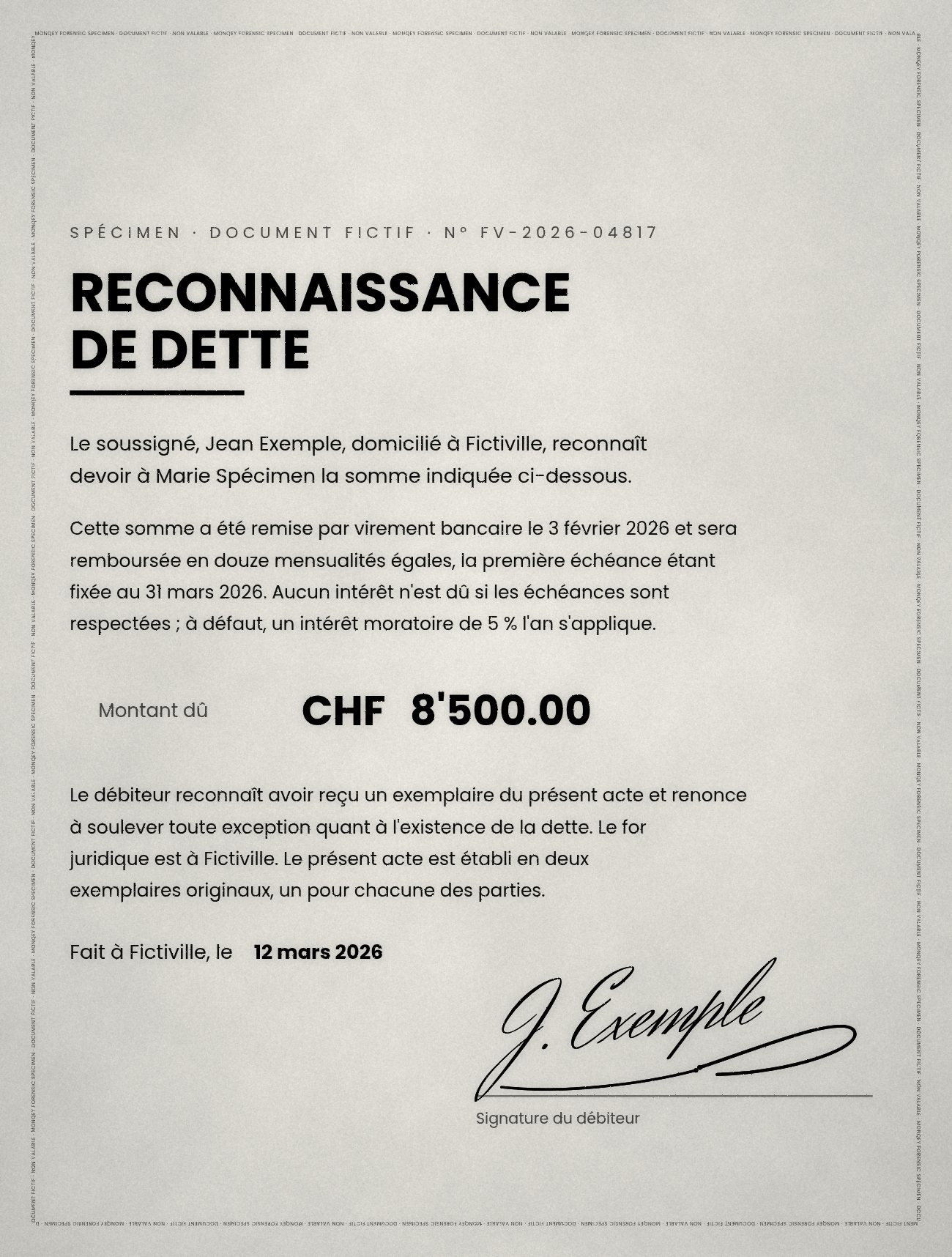
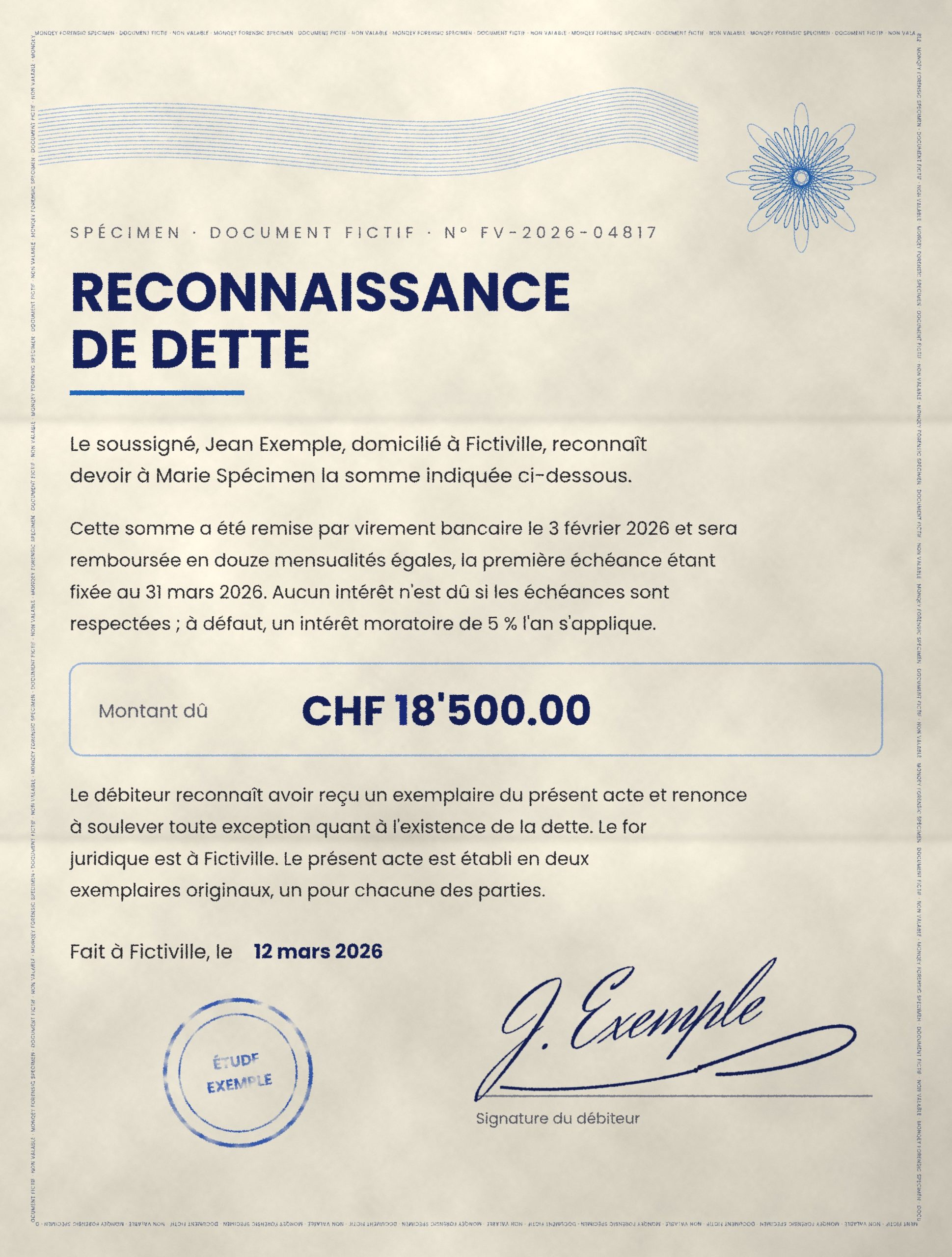
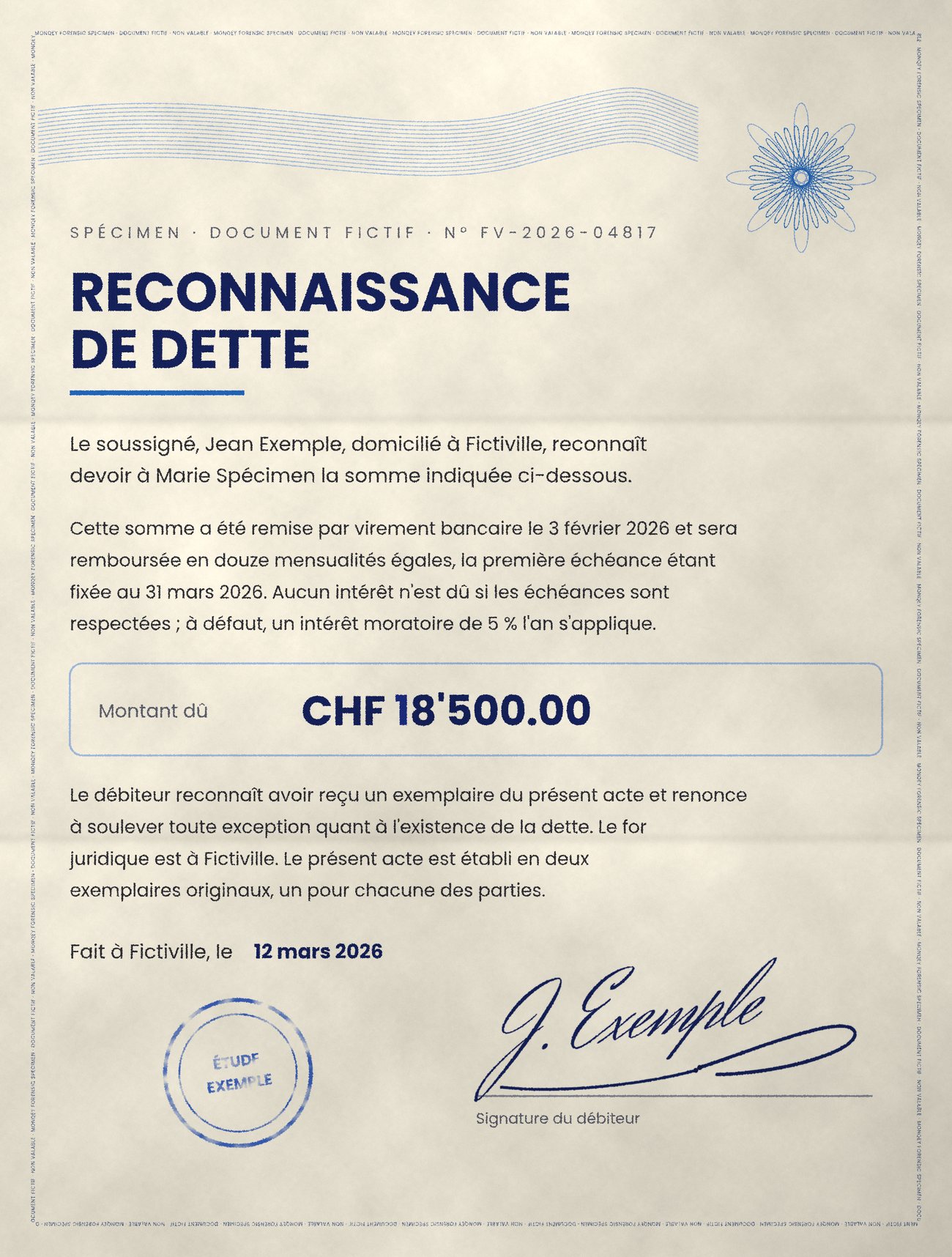
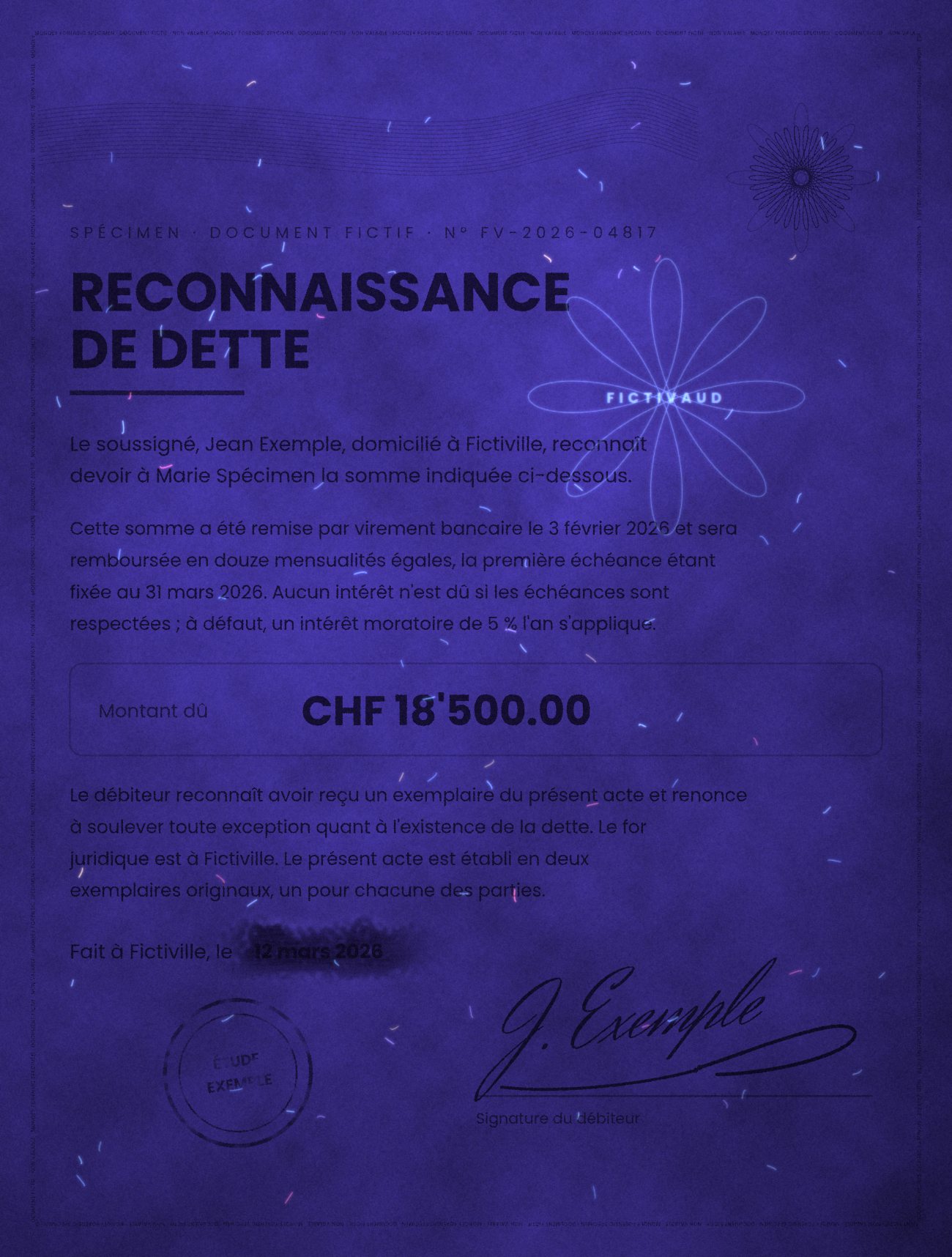
Fictitious specimen under white lightThe same specimen under ultraviolet lightThe same specimen in infraredThe same specimen in high definition
1 2 1 2 1 2
LightingVisibleWavelength400 to 700 nmZooming in× 1LightingUltravioletWavelength365 nmZooming in× 1LightingInfraredWavelength830 nmZooming in× 1LightingVisible · magnifying glassWavelength400 to 700 nmZooming in× 15
Step 1 of 4 · Examination mode

White light

The document as it is presented to us: an ordinary debt acknowledgement. Nothing catches the eye, and that is exactly what a successful fake is trying to achieve.

  1. 1The layout, the stamp and the signature appear consistent.
  2. 2The value of CHF 18'500 is readable, without any apparent rounding.
White lightUVIRLoupe × 15
Step 2 of 4 · Examination mode

Ultraviolet

Under UV light, the paper starts to speak: safety fibers and fluorescent patterns appear

  1. 1The date area no longer fluoresces: the paper has been scratched and then rewritten.
  2. 2The fibers and the «Fictivaud» pattern, invisible to the naked eye, confirm that the paper itself is of genuine origin.
White lightUVIRLoupe × 15
Step 3 of 4 · exam mode

Infrared

Two inks with identical appearance react differently to infrared light.

  1. 1The «1» in the amount disappears: it was added with another ink. The original amount was CHF 8'500.
  2. 2The signature reacts like the ink of a text: its outline remains to be examined under a magnifying glass.
White lightUVIRLoupe × 15
Step 4 of 4 · Examination mode

Loupe × 15

Fly over the specimen. At this magnification, what seemed to be a simple net becomes legible.

  1. 1The frame is a micro-print: «My forensic specimen, fictitious document, not valid».
  2. 2The signature is interrupted and then resumed with ink being applied at the point of resumption: a hesitant line, drawn rather than written.
White lightUVIRLoupe × 15

Demonstration image: no real document is shown on this site.
The method

A material examination, based on scientific methods.

Authenticity is assessed based on a set of material and technical indicators, examined according to the nature of the medium and the question posed. Original pieces are handled using non-destructive methods and returned intact.

01

Observation

The document, its support, its graphic elements and its material characteristics.

02

Analysis

Methods adapted to each medium to identify signs of authenticity, alteration or falsification.

03

Interpretation

The observations are presented in perspective to assess their consistency and scope in light of the question posed.

04

Report

Observations, methodology and conclusions in a clear, documented report adapted to the intervention framework.

Intervention framework

Private expertise

A confidential assessment, carried out upstream of any procedure, to determine where we are before deciding to take action.

Before taking action, instituting an act or indemnifying a claim.
Intervention framework

Judicial expertise

An intervention mandated by an authority or a court, in a criminal or civil context, according to the requirements of the procedure.

Public Ministry, courts, investigative authorities.
Intervention framework

Counter-expertise

A new examination of the evidence when the conclusions of a report are contested. The laboratory works on the material elements, never on the part's thesis.

When an adverse report weighs on the outcome of the case.
Intervention framework

Report review

A methodological review of existing expertise: methods used, findings, consistency of conclusions.

Without a new examination of the documents, based on the report.
Vision

«That documentary truth should never be a matter of chance.»

Our mission: to establish or refute, through scientific examination, the authenticity of the documents and supporting materials entrusted to us, in both criminal and civil contexts, in Switzerland and internationally.

Scientific rigor

Each conclusion is the product of a protocol, not of an intuition.

Independence and impartiality

The laboratory serves the truth of the document, never the thesis of a party.

Absolute confidentiality

The documents, the parties and the conclusions remain protected at every stage.

Concrete responsiveness

Helpful responses, within the deadlines of the procedures, on the ground if necessary.

The team

Complementary skills, the same requirement.

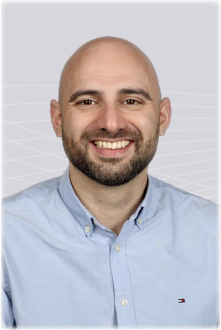
Julien Neirynck Part MF-01Flying over to examine Original verified
CEO · Senior FDE Specialist

Julien Neirynck

Specialist in Forensic Document Examination (FDE), he assesses the authenticity of documents and identifies signs of tampering or forgery.
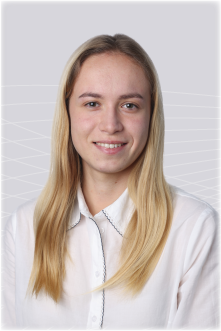
Ambre Tiberghien Part MF-02Flying over to examine Original verified
Managing Director · Forensic Specialist

Ambre Tiberghien

A graduate of the School of Criminal Sciences in Lausanne, specializing in criminalistics, she intervenes in expert analysis cases and performs the associated scientific analyses.

Anchoring

A Swiss laboratory, expertise with an international reach.

46.6003° N · 6.5403° E

HQ

Chemin de Praz-Riond 5 · 1303 Penthaz VD Switzerland

25.9565° N · 80.1392° W

USA office

3000 NE 190 Street Camden · 33180 Aventura, Florida USA

Blog

Learning to doubt in a useful way.

All articles
A person maintains a style when reading a document.

Fake bank documents: what is the value of an alert generated by AI?

Artificial intelligence detects up to 20% of suspicious documents each month at a French neobank. But a report does not constitute proof of fraud. For the compliance teams, the stakes are...

Fake document generated by AI: what is the value of an identity document displayed on a screen?

Can a fake document generated by AI deceive security checks? In Mumbai, an official card made with artificial intelligence was reportedly presented in the form of an image on a...

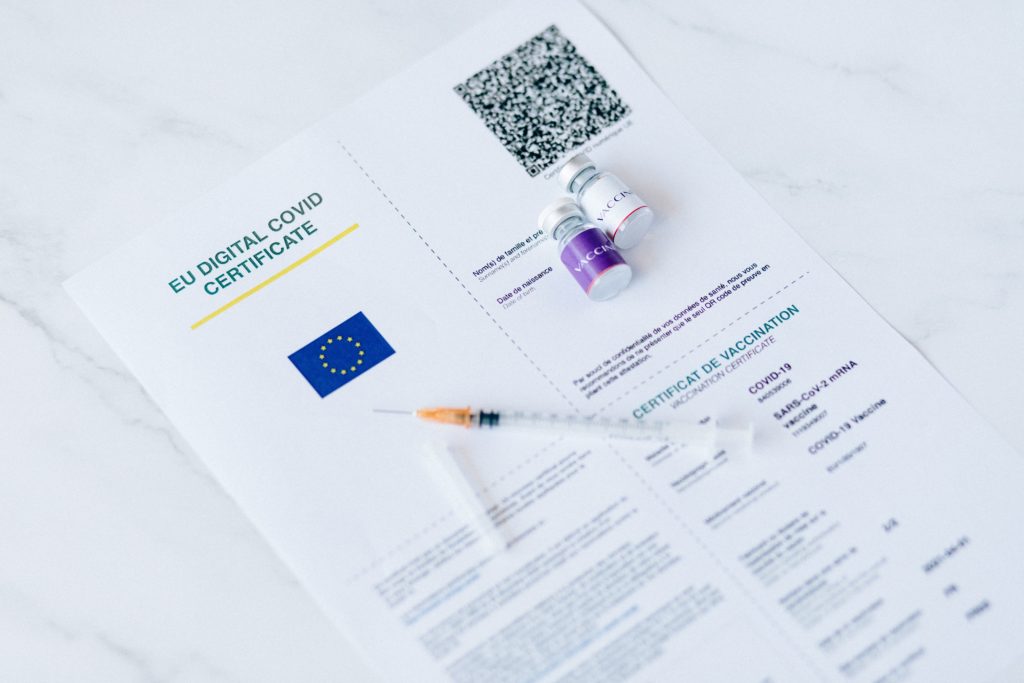
Fake vaccination certificate: can a genuine document be fake?

The cases of false Covid-19 vaccination certificates, revealed several years after the events, raise judicial and administrative issues. How can a false document be distinguished from an authentic certificate...

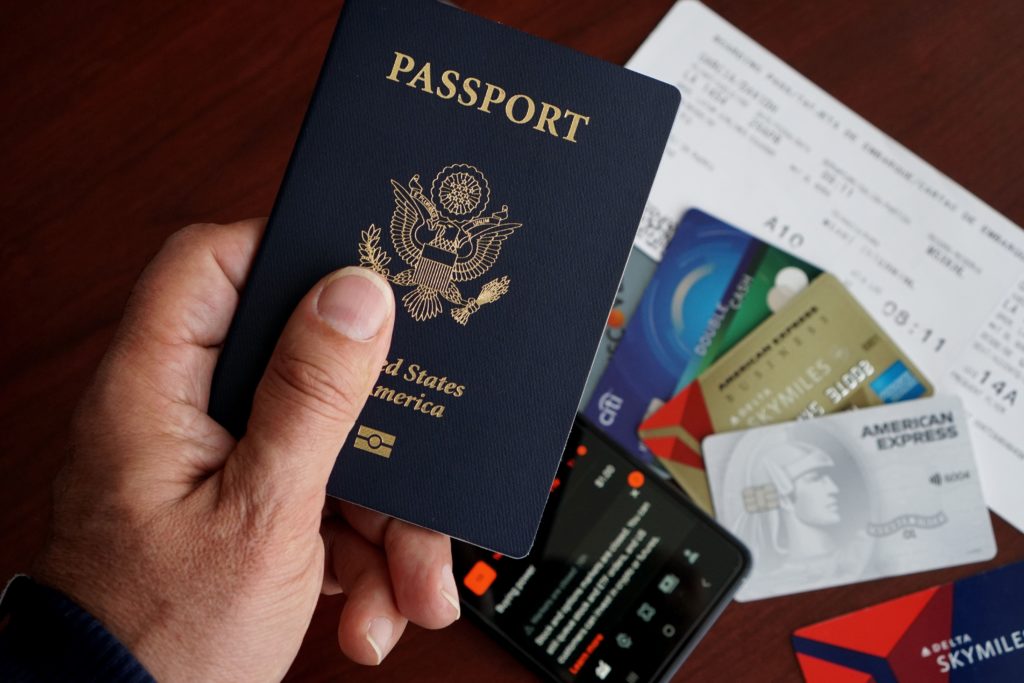
Fake identity documents: when the real passport disappears

The dismantling of a European migrant trafficking network reveals the importance of document fraud. Fake identity documents, photo replacements and falsification of residence permits: find out more...

Signature expertise: when the produced document aggravates the case

A medical order produced to justify a positive doping test turned out to be entirely fabricated, including the signature. This case highlights how a document intended to exonerate can actually complicate a case. Find out...