

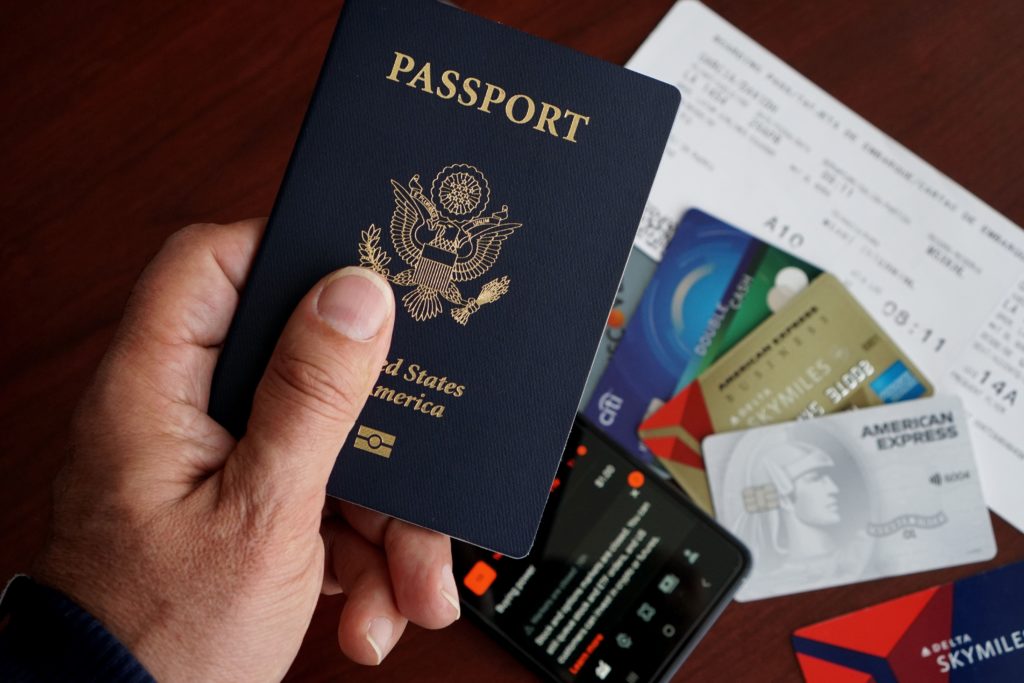
On September 23, 2026, Europol announced the conclusion of an investigation conducted with the authorities of seventeen countries against a migrant trafficking network operating via the airports of the Schengen area. The described modus operandi is documentary: once entering the European Union, the individuals concerned destroyed or abandoned their original identity documents, replaced them with fake documents provided by the network. For a control, investigation, or migration authority, the question is concrete: how to distinguish, on a seemingly legitimate document, an authentic document from a fake?
A modus operandi based on documentary fraud
According to Europol, the action day on September 22, 2026, conducted in Austria, Spain, Italy and the United Kingdom, resulted in six arrests, ten searches and the seizure of identity documents, electronic equipment and cash. One of the identified cells is believed to have contributed to the dissemination of more than 1,000 fake identity documents.
Substitution aims to erase the entry identity, which complicates the identification of the person and the resulting measures. For an authority, the issue is not the fabrication of the fake, but its detection on a document presented as valid. A fake is not always crude: the difficulty lies in deciding on a document that appears to comply with the expected visual codes.
The phenomenon is not limited to international networks. In Switzerland, a check on more than 1,500 residence permits in a single canton revealed between 130 and 160 cases of forgery (blue News, June 2026), which represents nearly one in ten cases in the sample checked.
Recognizing fake identity documents: the method
The documentary examination is never based on a single visual impression. It combines several observations, without damaging the piece:
- the consistency of the security elements expected for this type of document with what is actually observed;
- traces of a substitution of photography, revealed in particular under ultraviolet or infrared lighting;
- the alignment and typography of the biographical data, compared to the known official models;
- ink smudges or overlaps on the data page, signs of a modification after the issuance;
- the consistency of the support itself (paper, polycarbonate) with the type of document announced.
These examinations, carried out using white light, UV and IR, are non-destructive: the item remains intact and usable for the remainder of the procedure. The conclusion relates to what the document reveals, never to the intention of the person who presents it.
What independent expertise brings to the authorities
Public laboratories process a significant volume of documents, with deadlines set by their institutional priorities. When the timeline for an investigation or administrative review does not align with these deadlines, independent expertise provides a documented protocol: receipt under seal, traceability of each manipulation, preservation of the document, and then a report whose conclusions are enforceable before an authority or a court.
This independence implies the absence of any link with the parties: the laboratory establishes what the document reveals, without taking a position on the subsequent course of action regarding the case, which falls under the competent authority. It also allows for the provision of a counter-expertise when a preliminary conclusion is contested.
Preparing an application for review
The value of a report also depends on what precedes the examination. As soon as a piece appears questionable, a few measures preserve its use:
- Place the document in an envelope or protective bag, without applying plastic wrap, stapling it, or annotating it;
- record the chain of possession: date of seizure, persons who handled it, places of storage;
- formulate the question posed to the expert and the deadline for the procedure.
These elements allow the nature of the examination to be defined quickly and a time frame compatible with the procedure. They are specified during the first exchange, before any transmission of the document.
What this changes for your authority
A network dismantled at the European level, a cantonal control that reveals falsifications on a sample of residence permits: in both cases, the question posed is the same: how to distinguish an authentic document from a fake, without always having the time of a saturated laboratory.
MonQey Forensic provides the authorities, in Switzerland and internationally, with independent documentary expertise based on a non-destructive examination method and complete traceability, from the receipt of the item to the submission of the report. The page dedicated to the authorities present the intervention frameworks.