

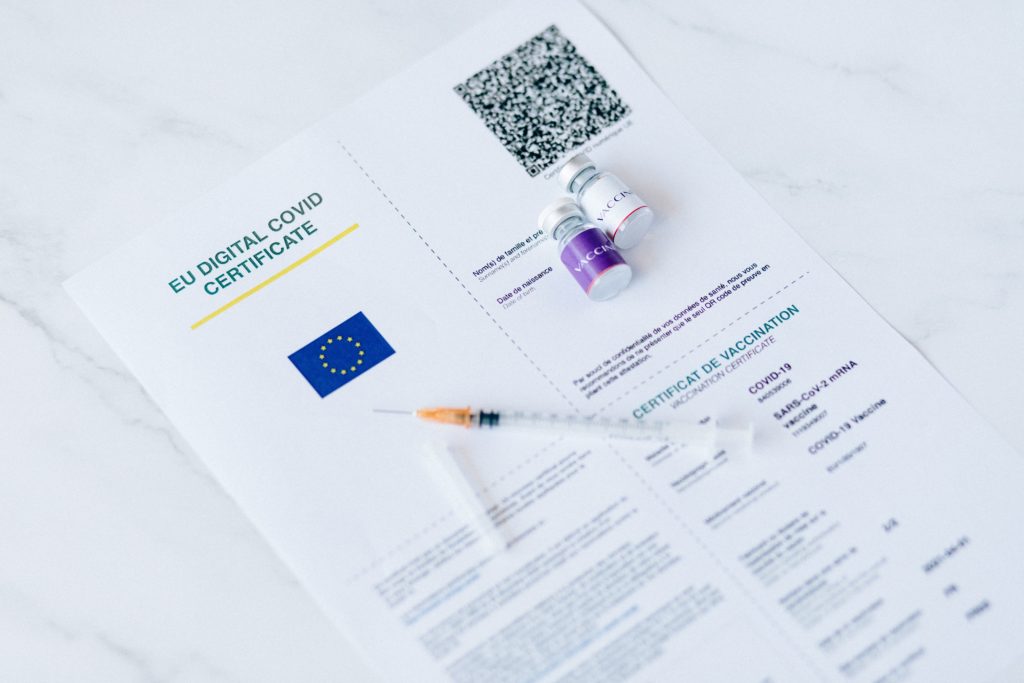
Several cases of false Covid-19 vaccination certificates involving Swiss sports personalities were made public in 2026. One of them resulted in a conviction for forgery in the titles. These cases remind us that the falsified health documents of 2021 and 2022 did not disappear with the end of the measures: they can resurface in a criminal, migration or administrative procedure several years after the events. For the authority that must decide, the question is what a document reveals, and how to establish it in a conclusive manner.
An update on the news, without judgment on the individuals
MonQey Forensic does not express any opinion on these cases or on the individuals involved. Only the material authenticity of a document is the subject of scientific expertise. For a public prosecutor’s office, a migration agency or a police force, the question remains the same: to establish, using a documented method, whether a document is authentic or falsified, and what this conclusion allows to be asserted.
How to spot a fake vaccination certificate?
A health certificate, printed or digital, combines several layers of information: the support, the printing or encoding, and the data it contains. The examination covers each of them:
- the support Consistency of the paper, ink or printing with the announced date;
- the alterations Repetitions, additions or superimpositions invisible to the naked eye;
- the digital code structure and consistency of the encoded data with those printed;
- The chronology : stamp, signature and serial number confronted with the claimed context.
These examinations are non-destructive. White, ultraviolet and infrared light reveals invisible elements in natural light without damaging the room. Each observation is photographed and recorded, so that the conclusion can be verified by a third party, including during a second opinion.
What the expertise establishes, and what it does not establish
Documentary expertise answers a specific question: is the document under examination authentic, and if not, what evidence supports it? For a contested certificate, several conclusions are possible:
- the document was falsified using an authentic model;
- the document was entirely fabricated;
- The document is materially authentic, issued by an official system, but based on false declarations. The examination must then be supplemented by checks with the issuer, which are part of the investigation.
Each of these conclusions has different consequences for the subsequent proceedings. The expert report, however, does not establish either the intention of the person who submitted the document or the outcome of the proceedings. This distinction protects the authority that relies on the report: the conclusion concerns the document, never the person.
Presenting the right piece, asking the right question
For a health certificate, the form of the document determines the examinations that may be carried out. Before requesting an expert opinion, it is useful to:
- to retain the original, printed or digital copy, rather than a screenshot or photocopy;
- specify how and when the document was obtained, and then presented;
- formulate the question asked: falsification, complete fabrication or content to be verified with the issuer.
A well-posed question directs the examination towards findings that are useful to the proceedings, and avoids analyses that are not relevant to the decision. It is defined during the first exchange, before any transmission of the document, taking into account the criminal, migration or administrative framework of the case.
What this changes for the authorities
A false vaccination certificate is not just an administrative detail: it can constitute a crime, undermine a migration procedure or be produced as evidence in a judicial case. Independent expertise conducted according to a documented protocol provides a conclusive conclusion that is admissible in a court of law, an immigration office or a customs administration.
MonQey forensic examines the documents using a traceable method: receipt under seal, non-destructive examinations, a report detailing each step, in Switzerland and internationally. The laboratory intervenes in support of the authorities, without any connection to the parties. The page dedicated to the authorities present the intervention frameworks.